Haven Nº 016 — Europe › France › Normandy · The Window
Mont-Saint-Michel
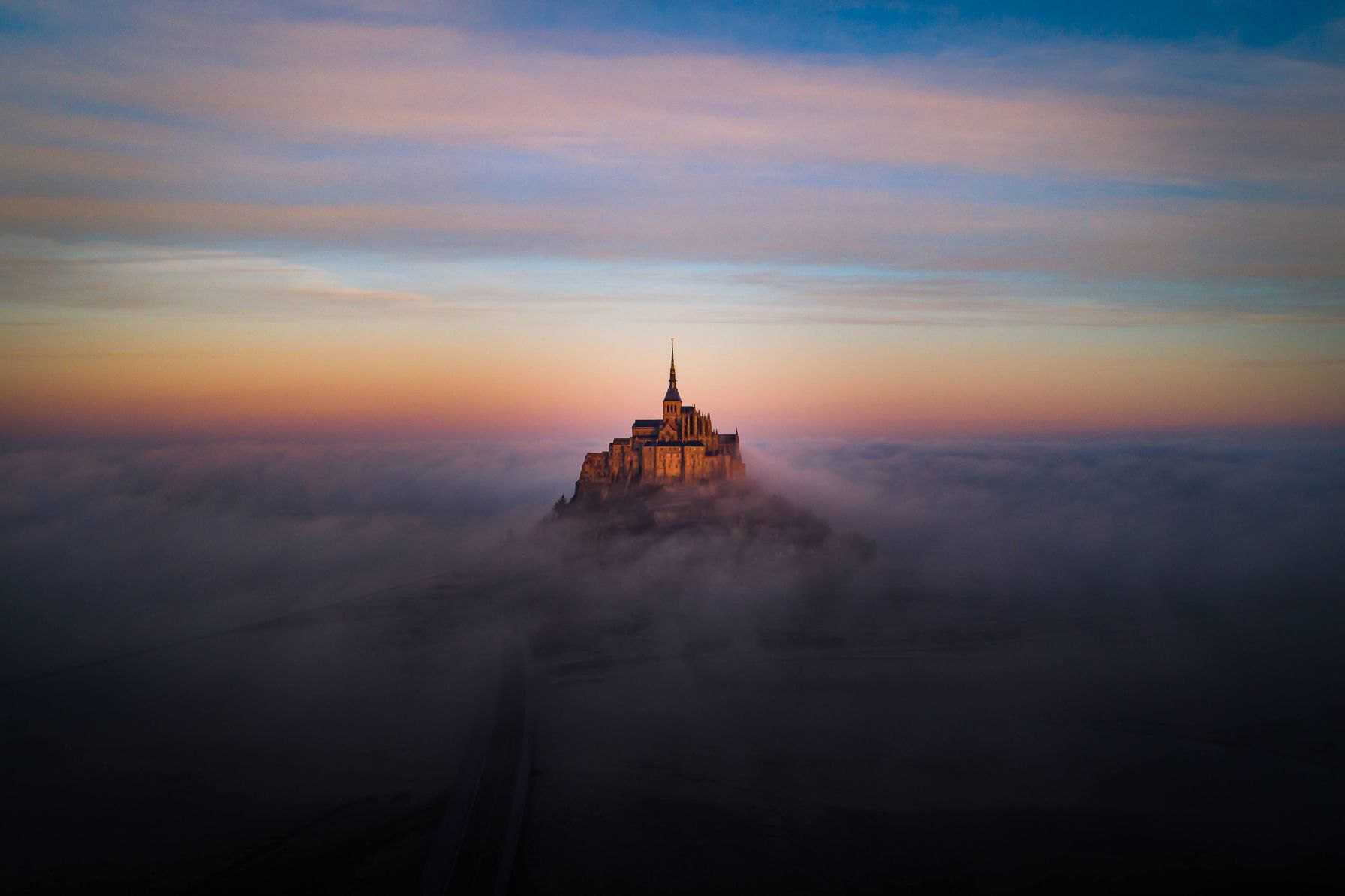
On February 22, 2027, the sea comes back nine miles to the Mont at sunrise. Be on the footbridge at six.
Mont-Saint-Michel, in Normandy, stands in sand most days. A few mornings a year the biggest tides in continental Europe bring the sea all the way back, and in 2027 the strongest on the official table arrives with the sunrise.

Monday, February 22, 2027 · 6 a.m.
On the footbridge, two hours early
Mont-Saint-Michel stands at the back of a bay in Normandy, where the tides are the biggest in continental Europe: up to 49 feet between low and high water. Most days the rock sits in sand. A few mornings a year the sea comes back nine miles and closes around it. You come for one of those mornings.
The strongest on the official table for 2027 is Monday, February 22. High tide at Saint-Malo, the reference port, is at 8:05 a.m., with a coefficient of 110; the tourist office says to add five minutes for the bay. The sun rises at 8:02. The tide and the light arrive together.
Be there two hours before. The village is open day and night, free, with no gate and no ticket, so sleep on the Mont on Sunday night, or at La Caserne, the hotel village by the car parks on the mainland, and walk out in the dark. Bring a flashlight. Cars stay on the mainland; from the car parks you walk, cycle or ride Le Passeur, the free shuttle. At six in the morning, walk.
The same day has a second high tide, at 8:31 p.m., also at 110. It comes almost two hours after sunset, in full dark. Take the morning.
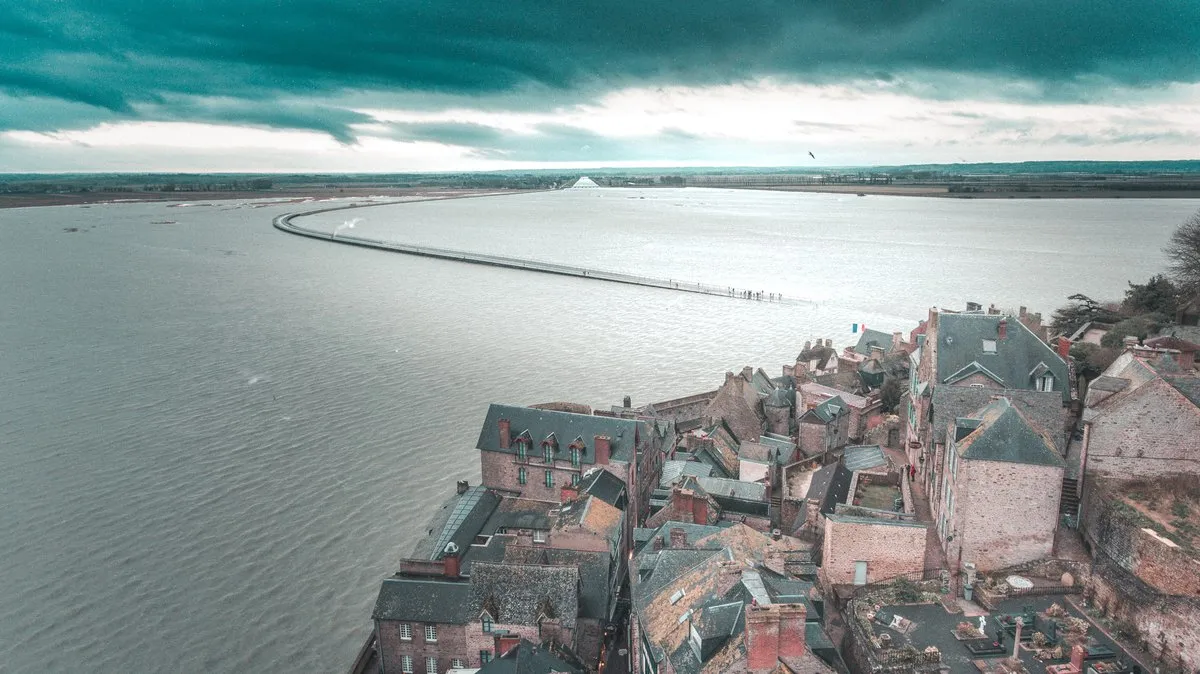
6:10 a.m. · The bay
Listen for the bore
The water comes first as a wave, the mascaret, a tidal bore that runs in at the front of the rising sea and up the Couesnon, the Sée and the Sélune. On the big tides it can stand a foot or more high, the tourist office says. It shows an hour and a half to two hours before high water.
The legend says it moves at the speed of a galloping horse. The abbey says it averages about 3.7 miles an hour. It is still faster than it looks, and the water can start to rise suddenly. Watch it from the footbridge or the walls. Do not walk out onto the sand without a guide, at any hour.
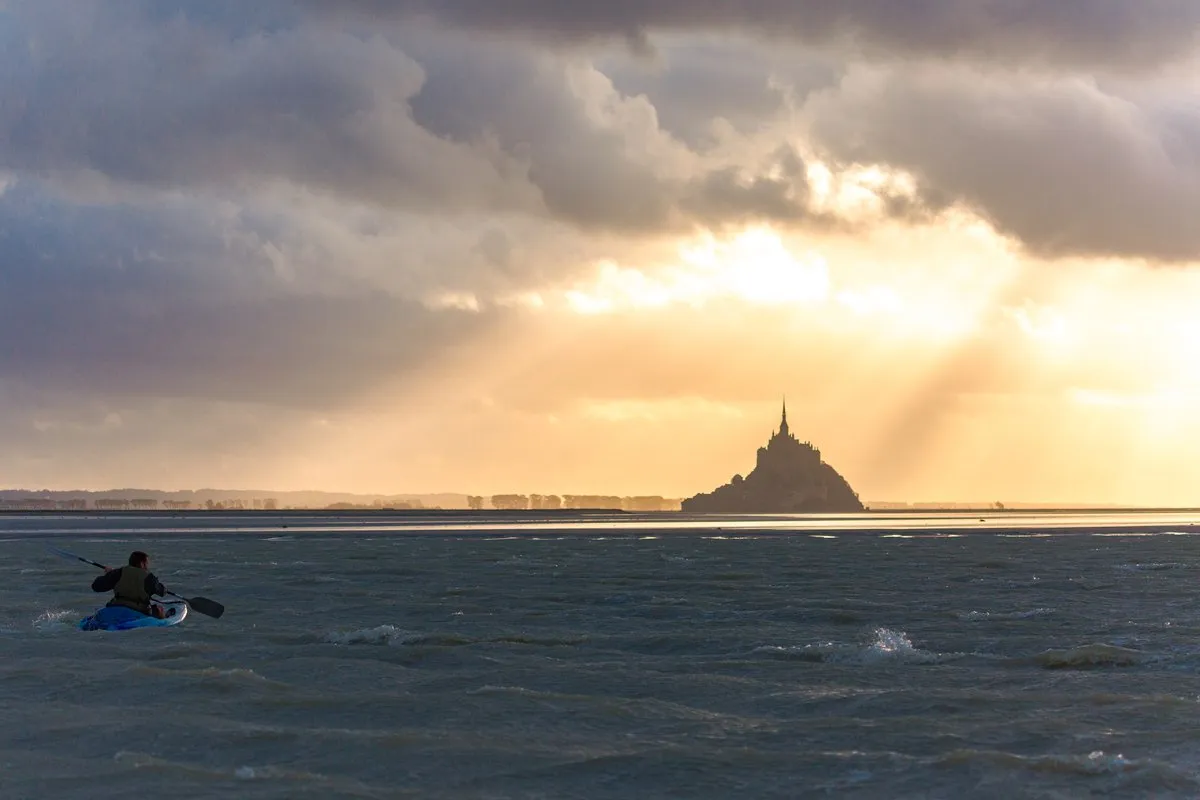
7:30 a.m. · The ramparts
First light, and the water at the gate
The sky starts to lighten at 7:30. On a tide this big, the sea should be at the foot of the walls by now. On the biggest tides the main gate floods, and you go in and out by a path through the rocks; the public body that runs the Mont lists those days in its tide booklet each year.
Climb the village street to the ramparts. The sun comes up at 8:02, onto water where an hour earlier there was sand.
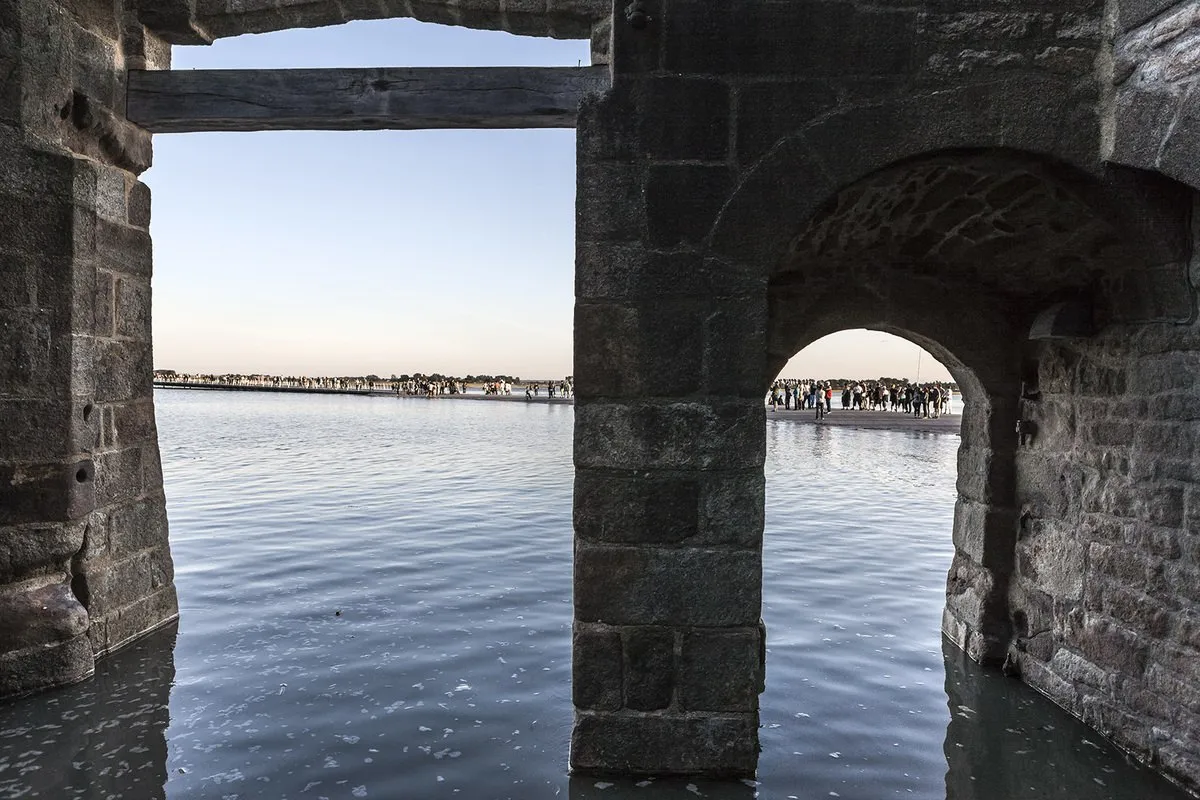
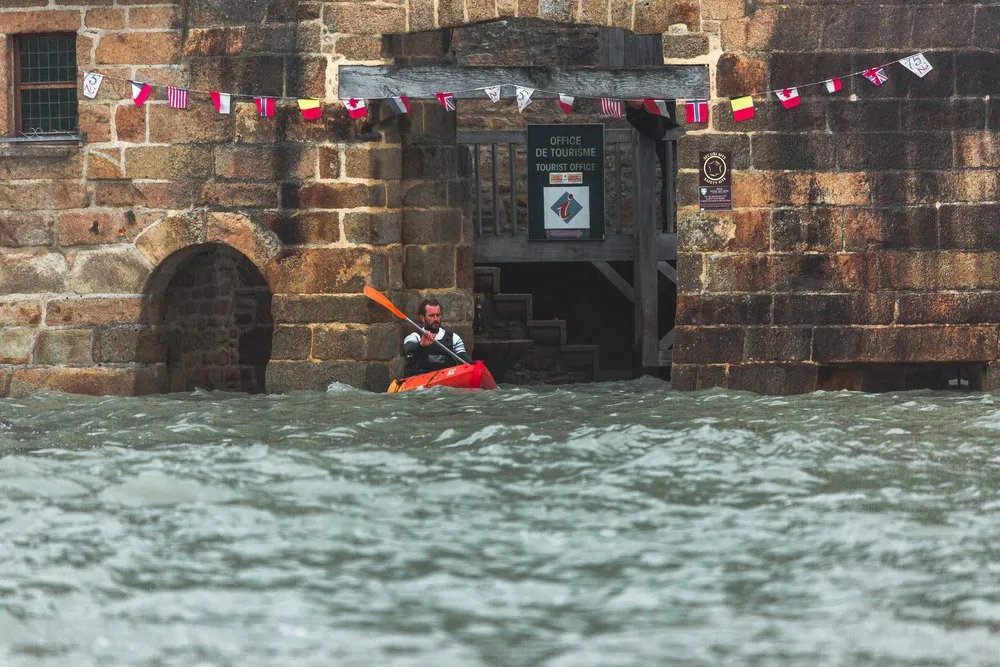
8:10 a.m. · High water
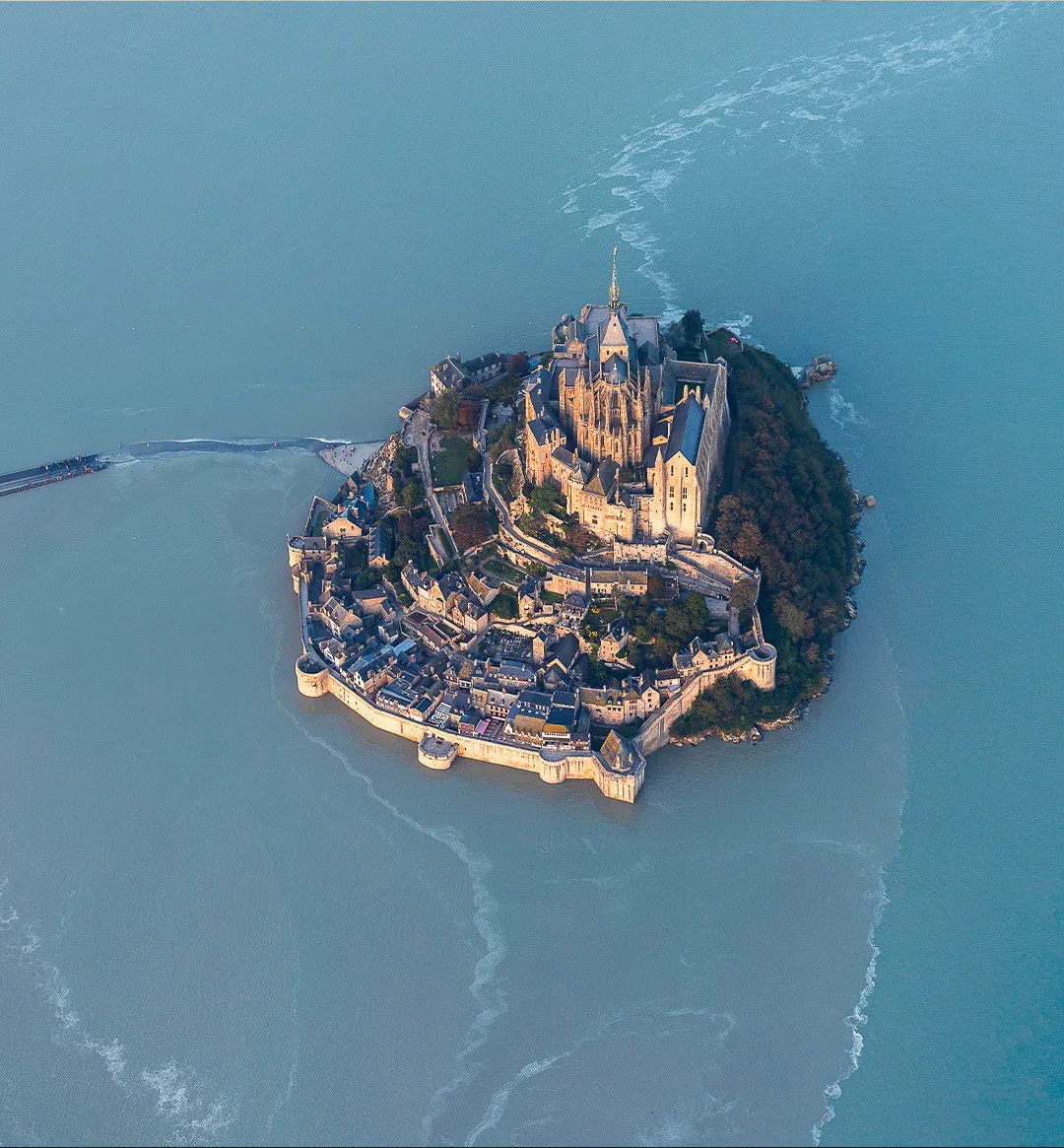
An island for an hour
This is the moment. In the strongest tides, the abbey says, the sea surrounds the rock completely. Once it has, the public body counts an hour to an hour and a half before you can reach the footbridge again. No one is going anywhere. You do not need to.
How high the water climbs depends on the day. Wind and air pressure can move both the hour and the height, the tourist office warns. The public body counts zero to twelve days a year when the water passes about 43 feet at Saint-Malo and the Mont becomes a full island, and in 2026 it listed not one in February or March. Its booklet for 2027 is not out yet. The coefficient of 110 is the best bet on the table; it is not a promise.
For an hour, the Mont is an island again, and nobody leaves.
9:30 a.m. · The West Terrace
Watch it leave
The abbey opens at 9:30. Book your ticket ahead, €13 until the end of March 2027, free under 18, and go straight up to the West Terrace, the first place the abbey suggests for watching the tide.
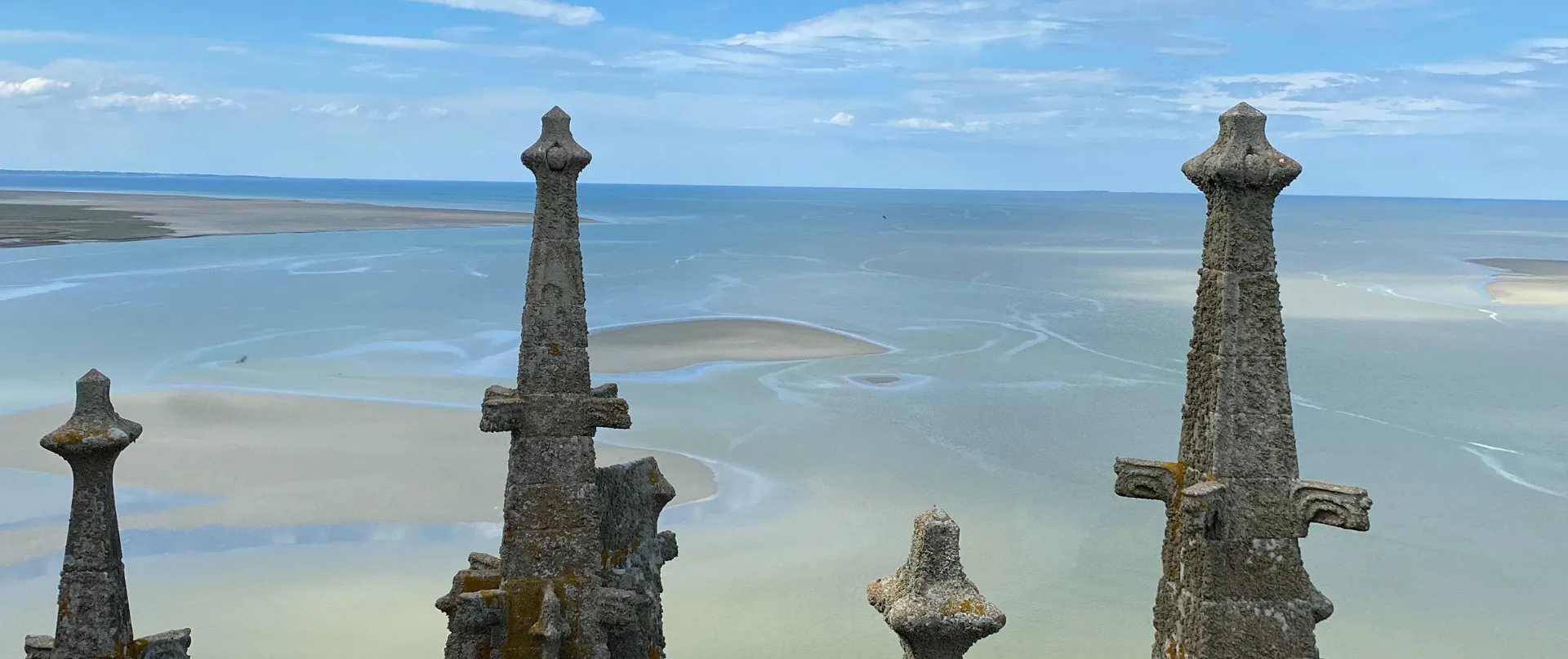
From there the bay spreads over almost 200 square miles, from the Pointe du Grouin to Granville, with the islet of Tombelaine in front of you and, on a clear day, the Chausey islands. Now the sea goes back out the way it came. Seals and dolphins come into the bay; look for them.
Six hours after high water, around 2 p.m., the dam on the Couesnon opens and flushes the river out into the bay; the river rises about 16 inches. The time is posted on a lighted sign at La Caserne.
The other dates
March 22 at sunset, and September
The great tides come 36 to 48 hours after a full or a new moon, the tourist office says, and the biggest fall near the spring and autumn equinoxes. In 2027 the moon is full in the first minutes of February 21, and the table’s highest coefficient follows on February 22. Next year it will be other days, which is why the table, not the calendar, decides.
If February is not possible, the 2027 table offers Monday, March 22: high tide at 7:25 p.m., coefficient 105, with sunset at 7:21. The sea comes in at dusk; the abbey has shut by then, so watch from the footbridge or the ramparts. The next morning, Tuesday, 7:41 a.m., coefficient 106, sunrise at 7:03.
The table has other tides above 100 on January 23 to 25 and on the evening of February 21. If you are in France for the holidays, the table tops out at 99 on December 25 and 26, 2026: a good tide, not a great one. The table for September, the other equinox, is not yet published. Check it in the spring.
The rest of the year
Sand, mostly
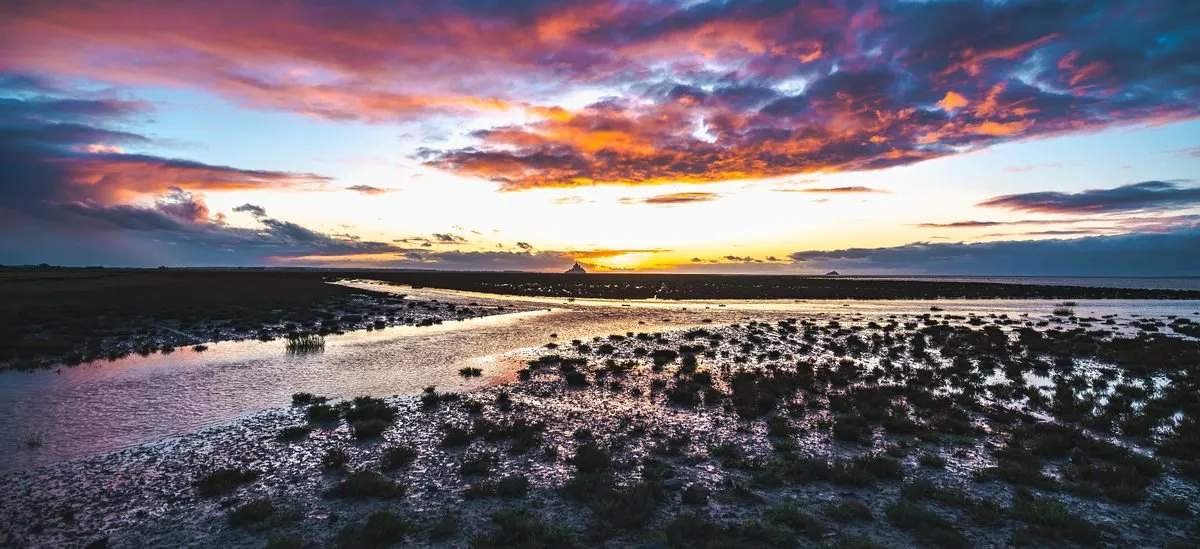
On the small tides, the sea does not reach the rock at all. On the bigger ones, about every two weeks, it touches the Mont four and a half hours after it starts to rise, then goes again. The rest of the year, the Mont stands in sand. On those days, walk it: licensed guides lead crossings of the bay on foot all year, the tourist office says, and nobody should try it alone.
From Paris, take the TGV from Montparnasse to Rennes, two hours, then the Keolis bus to the Mont, an hour and ten minutes. Book your room inside the walls or at La Caserne as soon as you settle on the date, and your abbey ticket too: the public body asks you to book the abbey as early as you can. From September to June, the car parks are free from 6:30 p.m. to 3 a.m. The abbey is free on the first Sunday of January, February, March, November and December, and from May to August it stays open until 7 p.m. For a Normandy weekend from Paris, see La Ferme Saint Siméon, in Honfleur.

The key
- Be on the footbridge by 6 a.m. on Monday, February 22, 2027: high tide is at 8:05 a.m. at Saint-Malo, coefficient 110, and the sun rises at 8:02.
- Sleep on the Mont or at La Caserne the night before: the village is open day and night.
- Watch for the bore from about 6:10, an hour and a half to two hours before high water.
- Once the sea has closed around the rock, stay where you are: count an hour to an hour and a half.
- If February fails you, come back on Monday, March 22, when high tide falls at sunset.
The dossier · Haven Nº 016
- Where
- Le Mont-Saint-Michel, Normandy, France
- The morning
- Mon, Feb 22, 2027 · high tide 8:05 a.m. · coefficient 110
- Sunrise
- 8:02 a.m. that day
- Be there
- 2 h before high tide · add 5 min to Saint-Malo times
- The evening
- Mon, Mar 22, 2027 · 7:25 p.m. · coefficient 105 · sunset 7:21
- The rise
- Up to 49 ft between low and high water
- Cut off
- About 1 to 1½ h once the sea closes
- Abbey
- 9:30 a.m.–6 p.m. Sept–Apr · €13 · book ahead
- Village
- Open day and night · free
- From Paris
- TGV to Rennes 2 h, then bus 1 h 10
Our verdict
Sleep on the Mont on Sunday night and be on the footbridge at six on Monday. You get the bore in the dark, the sea at the walls at sunrise, and the abbey's terrace when the bay empties again.
Not for you if you need a promise: the height of the water depends on the wind on the day, and some great tides stop short of the walls.
Before you go
When does the sea surround Mont-Saint-Michel?
Only at the strongest tides, a few times a year, mostly around the spring and autumn equinoxes. On the official 2027 table, the biggest are February 21 to 24 (up to 110) and March 22 to 24 (up to 106); September's table is not published yet.
What time should you get to Mont-Saint-Michel for a great tide?
Two hours before high tide, the tourist office says. The bore, the small wave at the front of the rising sea, shows an hour and a half to two hours before high water.
Where is the best place to watch the tide at Mont-Saint-Michel?
The abbey's West Terrace, or the footbridge. In winter the abbey opens at 9:30 a.m., so for a dawn tide, stand on the footbridge or the ramparts.
How big are the tides at Mont-Saint-Michel?
Up to about 49 feet between low and high water. At the great tides the sea goes out about nine miles and comes back very fast.
How long is Mont-Saint-Michel cut off at high tide?
Count an hour to an hour and a half before you can reach the footbridge again, the public body that runs the site says. It counts zero to twelve days a year when the Mont becomes a full island.
Abbey of Mont-Saint-Michel, official site. We earn nothing on this link. Images: courtesy of the Centre des monuments nationaux, Destination Mont Saint-Michel Normandie and the Établissement public du Mont-Saint-Michel.
The Key · our weekly letter
Get the dossier: Mont-Saint-Michel.
The rooms to ask for, the tables to book and the week to go, in one letter. Then The Key, every Thursday.
The list opens soon, with the first letter.