Haven Nº 032 — Asia › Japan › Yamagata · The Window · Stays
Ginzan Onsen
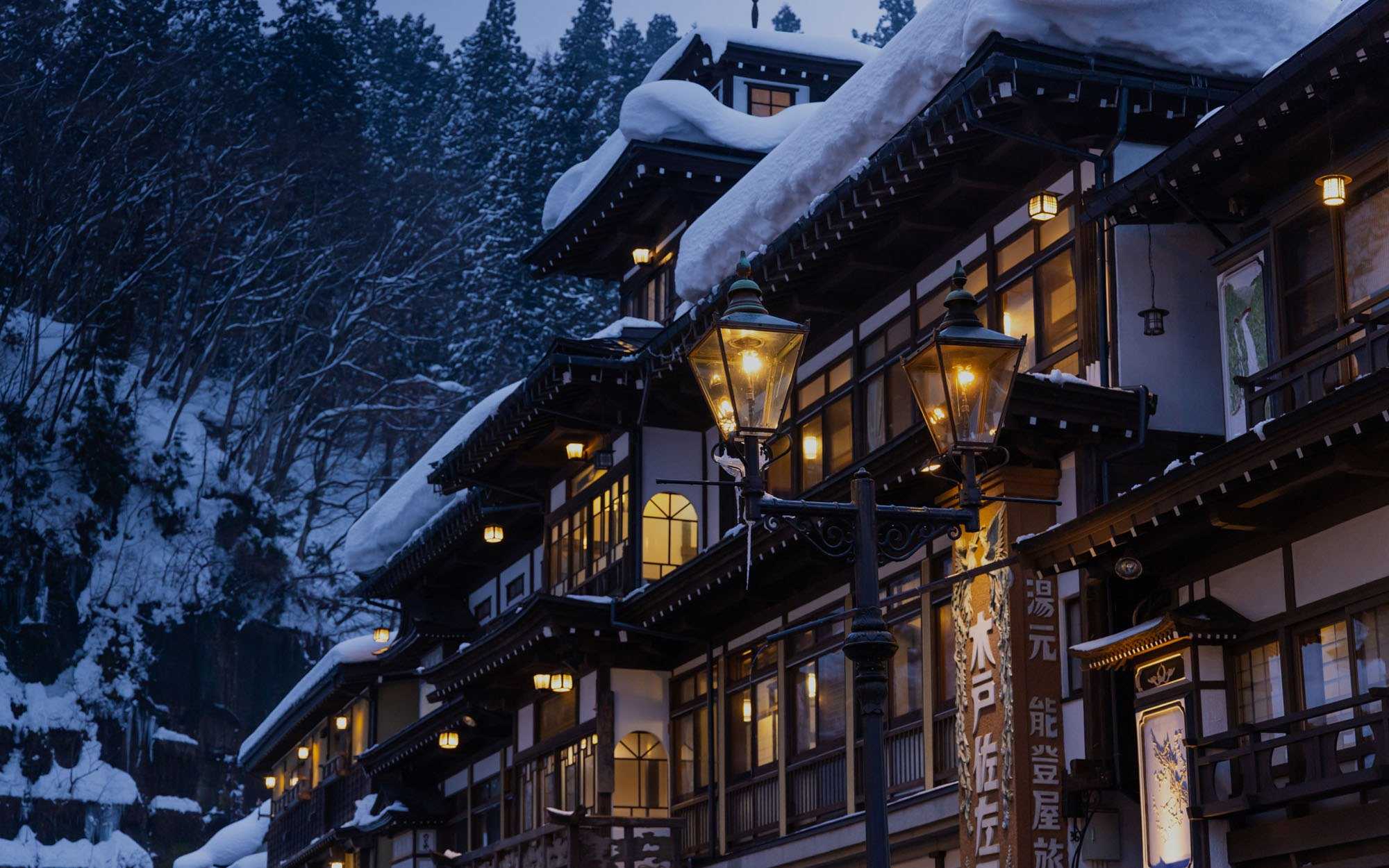
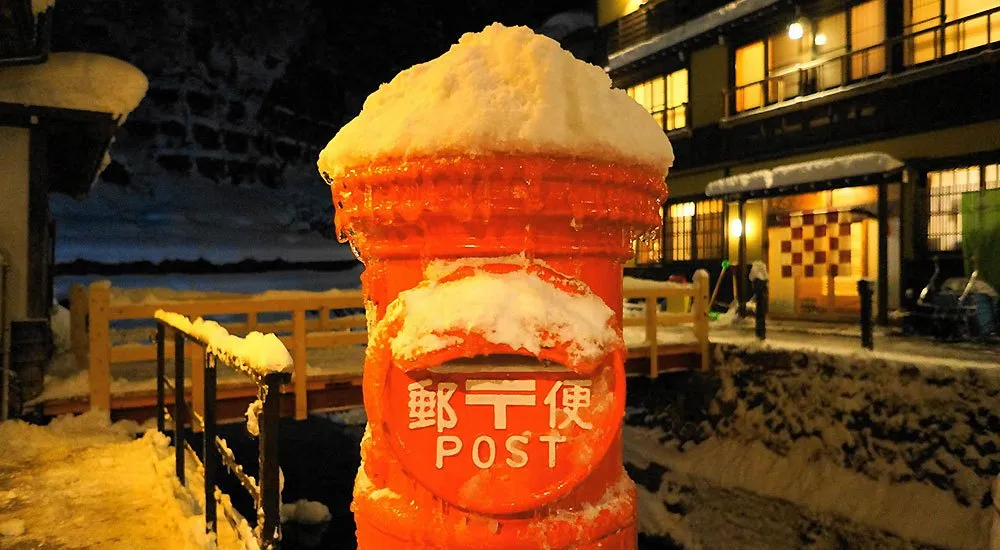
The gas lamps on Ginzan Onsen's one street come on at dusk. This winter, to be there, you need a bus seat with a time on it, or a room.
Ginzan Onsen, in Obanazawa, Yamagata, is a hot-spring town of wooden inns on both banks of a river, about four hours from Tokyo. From December 19 to March 7, day visitors come in only by timed shuttle; those who sleep there keep the street after the last bus.

December 1, midnight
The seats go on sale before the snow
Ginzan Onsen is one street in the mountains of Yamagata: a river down the middle, wooden inns three and four stories high on both banks, gas lamps that come on in the evening. In winter the snow sits thick on the roofs. That is the picture people come for, and for the second winter running, day visitors leave their cars outside town and come in by shuttle. Last winter you could pay extra for a set time. This winter every seat is sold for one.
The rules run from December 19, 2026, to March 7, 2027. The buses that matter leave between 2 and 6 p.m., because those are the ones that reach the town for dusk. January’s go on sale on December 1 at midnight, Japan time, which is 10 a.m. on November 30 in New York. February’s and early March’s go on sale on January 1. Booking closes at 5 p.m. Japan time the day before, payment ahead is by credit card only, with a ¥165 fee per booking, and children of elementary-school age ride free, up to one per adult. If you miss the sale, the ticket machines at the transfer point sell what is left on the day.
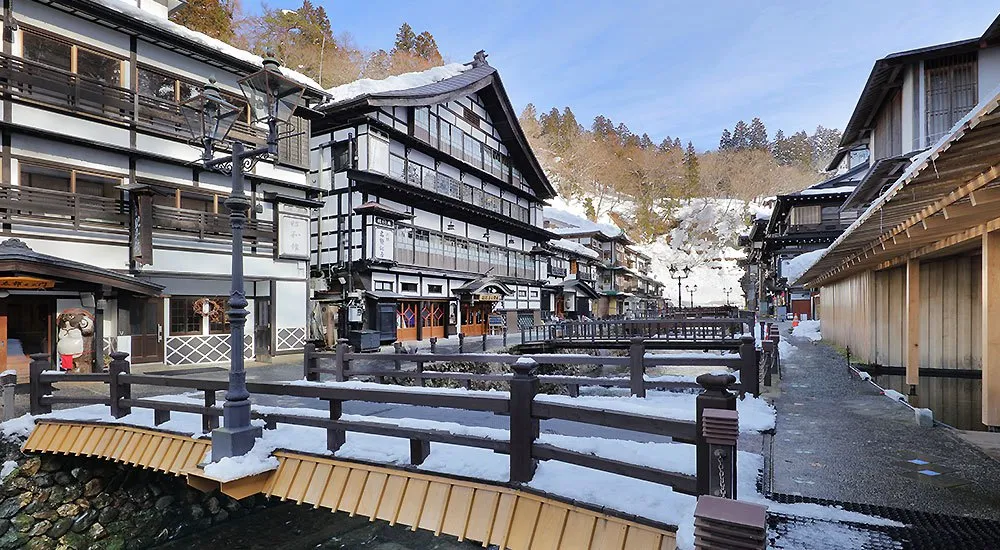
This winter, you need a bus ticket with a time on it to watch the snow fall on this street.
Tokyo, about four hours
Train, bus, then the shuttle
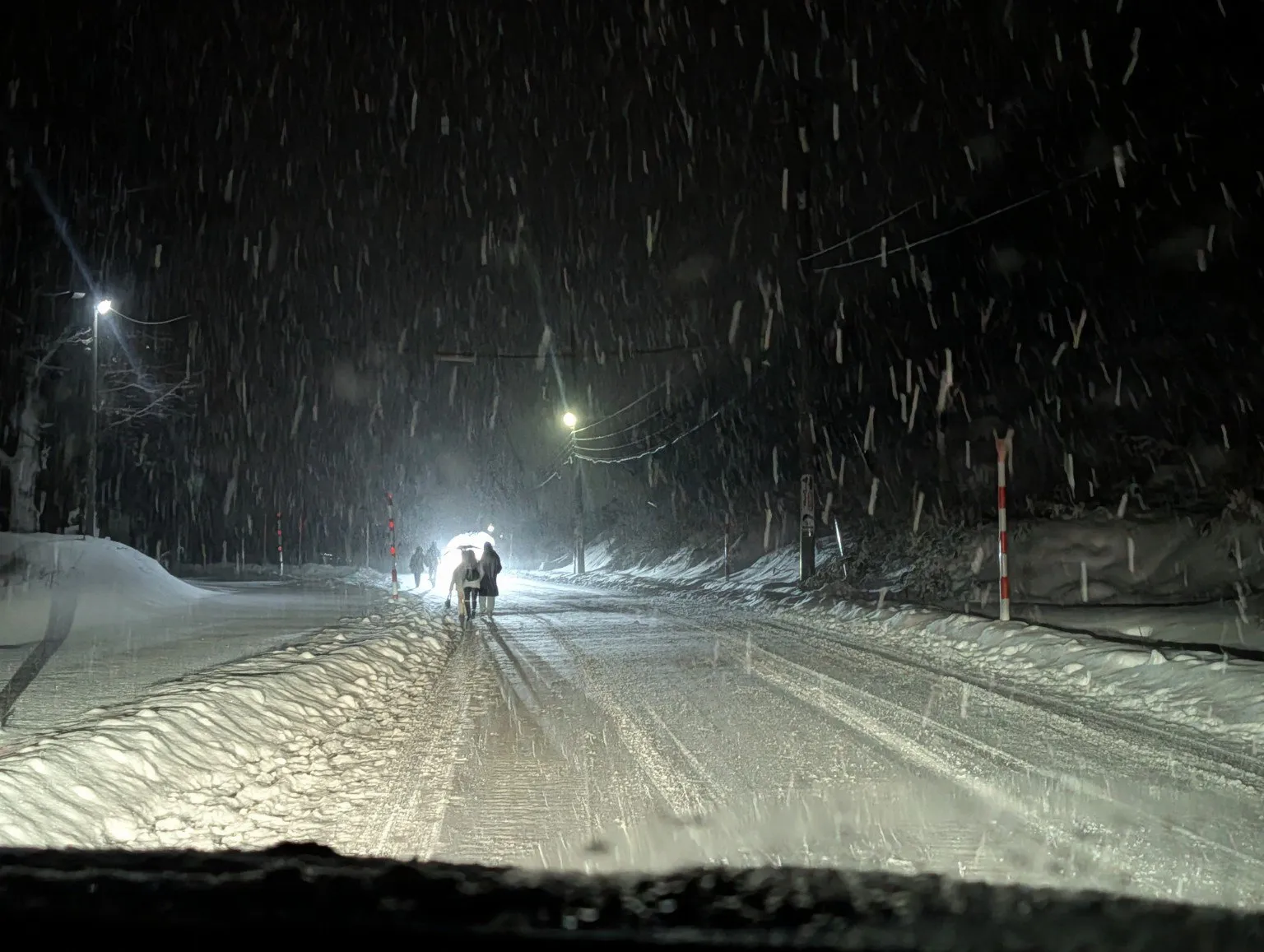
From Tokyo, the Yamagata Shinkansen takes about three hours to Oishida, and a bus about 40 minutes more. In winter, if you are only visiting for the day, the bus is expected to set you down at Taisho Roman-kan, a hall about a mile and a quarter short of the town, where everyone changes to the shuttle. Drivers park there too. No private cars go farther. The reason is the road: there is only one, and a single car stuck in the snow can keep an ambulance out of the town.
The shuttle leaves every 20 minutes, from 9 a.m. to 6 p.m. A round trip costs ¥700 to ¥1,200 if you book ahead and ¥300 more on the day, depending on the hour; the evening band is the dearest. Your ticket names a return bus 90 minutes after the outbound one. Miss it and you queue. The town says evening waits run longest and have reached three hours.
Do not walk that mile and a quarter. In winter there is no sidewalk, the snowbanks narrow the road, and whiteouts come in fast. The town’s page puts that warning first, under the word IMPORTANT.
Dusk
When the lamps come on
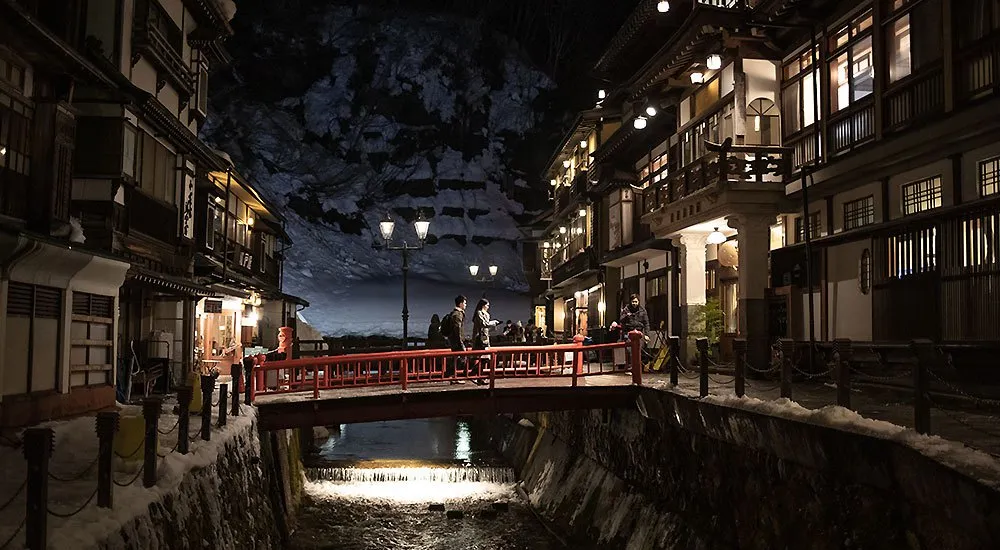
In Yamagata the sun sets at about 4:30 p.m. on January 1 and about 5 p.m. on February 1. Book the bus an hour before, so you are on the bridge when the lamps light and the windows of the inns go yellow. The street is short. Walk it once in the last daylight, then again in the dark, and stop on each footbridge on the way back: the inns face each other across the water, and the bridges are where you see both rows at once.
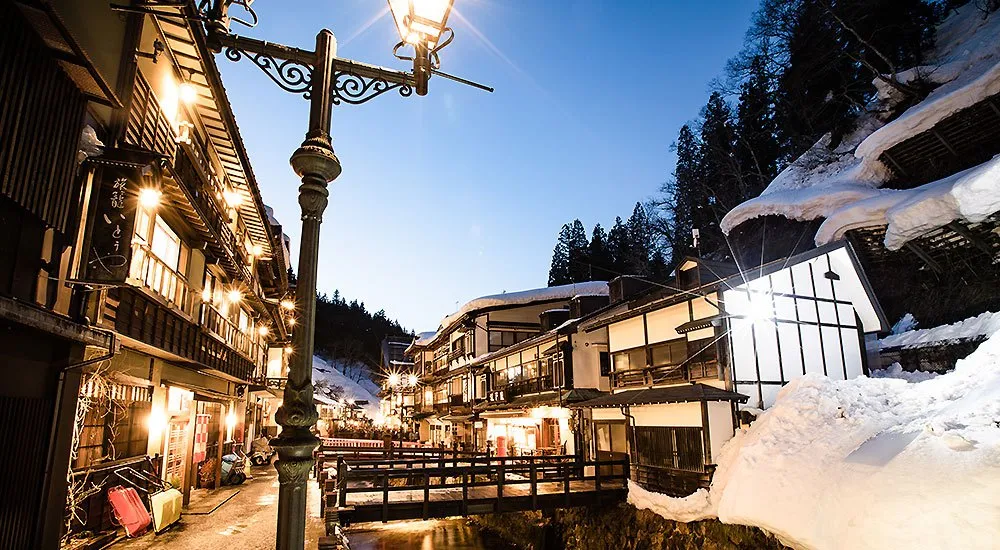
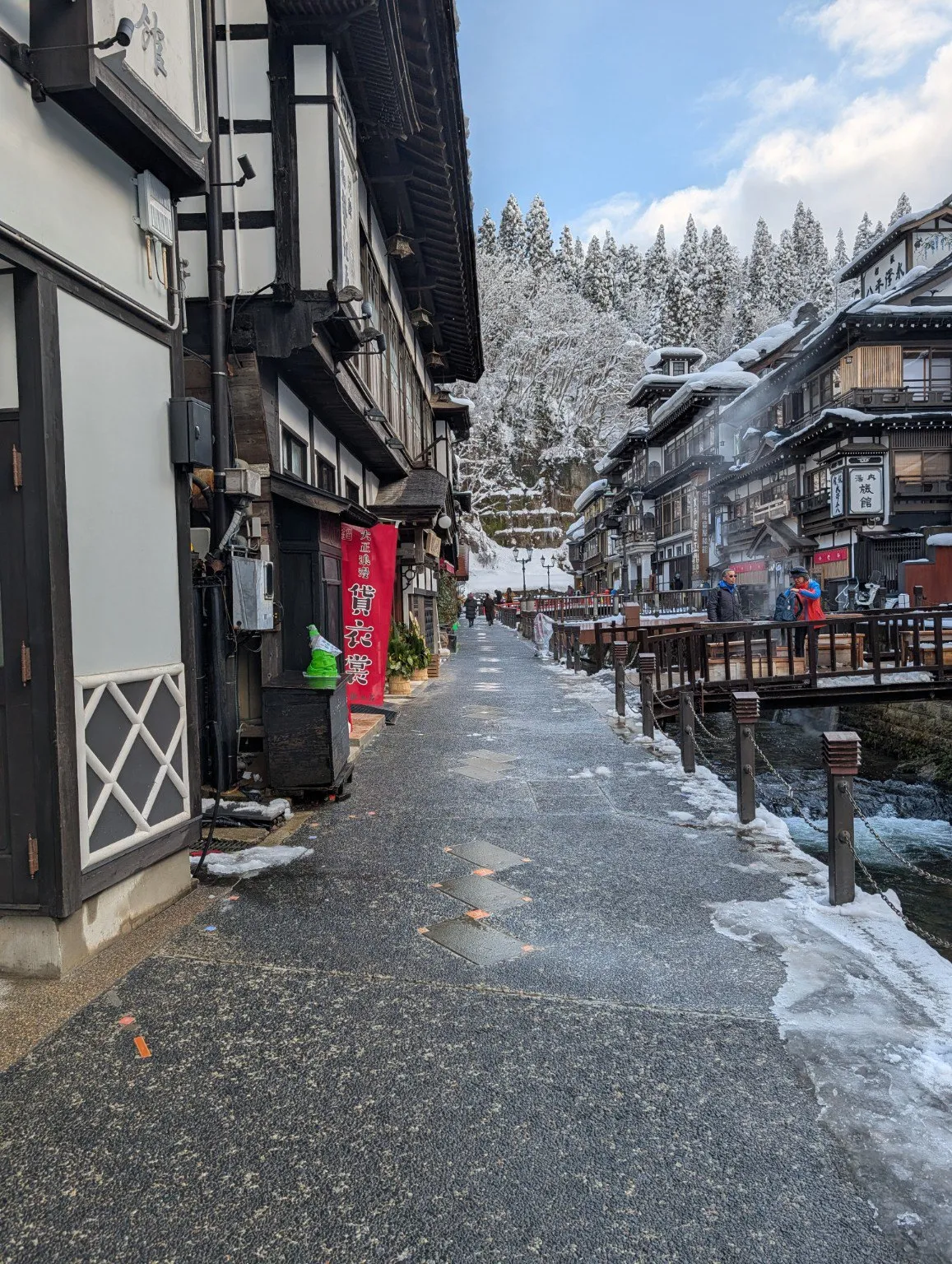
The inns you are looking at went up after 1926, when new drilling brought hot water in quantity and the town rebuilt in wood, three and four stories high, in what was then a Western style. Since 1986 a local ordinance protects the street as it is. The name means silver mountain: it comes from a silver mine, found in 1457.
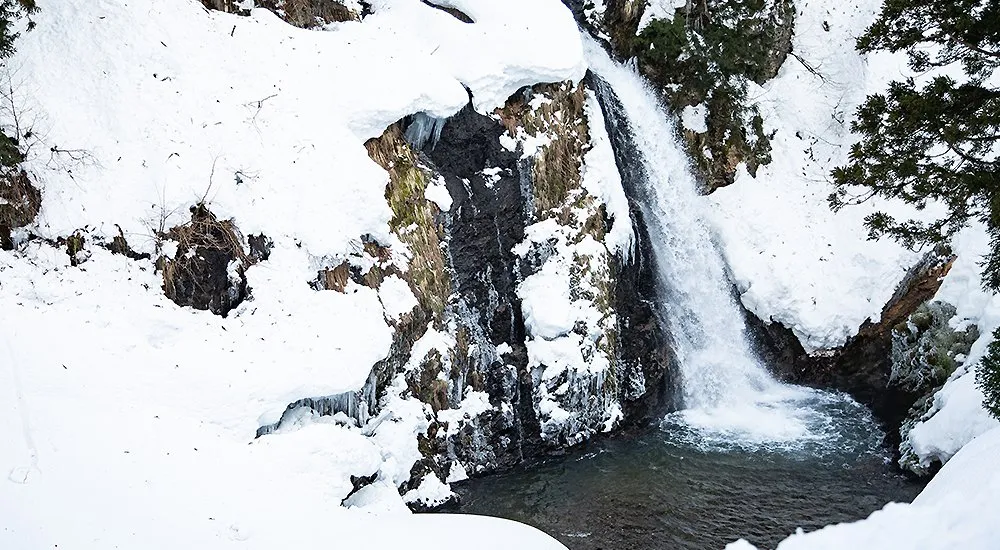
Look down as well as up. The paving carries snowflake designs, and several inns have plaster pictures, kote-e, set into their walls. Walk on the river side of the diamond-shaped markers that run down the middle of the street. Snow slides off the roofs on the building side, and the town limits the crowd so the river side stays wide enough. Shirogane Falls drops 72 feet between the snowbanks. The old mine tunnels beyond are closed from the first snow until May.
For a bath, Kajika-yu, the public bathhouse halfway along the street, is open from 8 a.m. to 8 p.m. for ¥300, and free if you are staying in town. Omokage-yu, at the far end, is a family bath taken privately for 50 minutes, booked between 10 a.m. and 5 p.m. at the izakaya Choromatsu. For dinner, the two things to look for are Obanazawa beef and Obanazawa soba. At the town’s entrance, by the river, a footbath runs with water straight from the spring.
7:30 p.m.
The last bus, and the night after it
The last shuttle back leaves at 7:30 p.m. The way to see the street after it is to sleep on it.
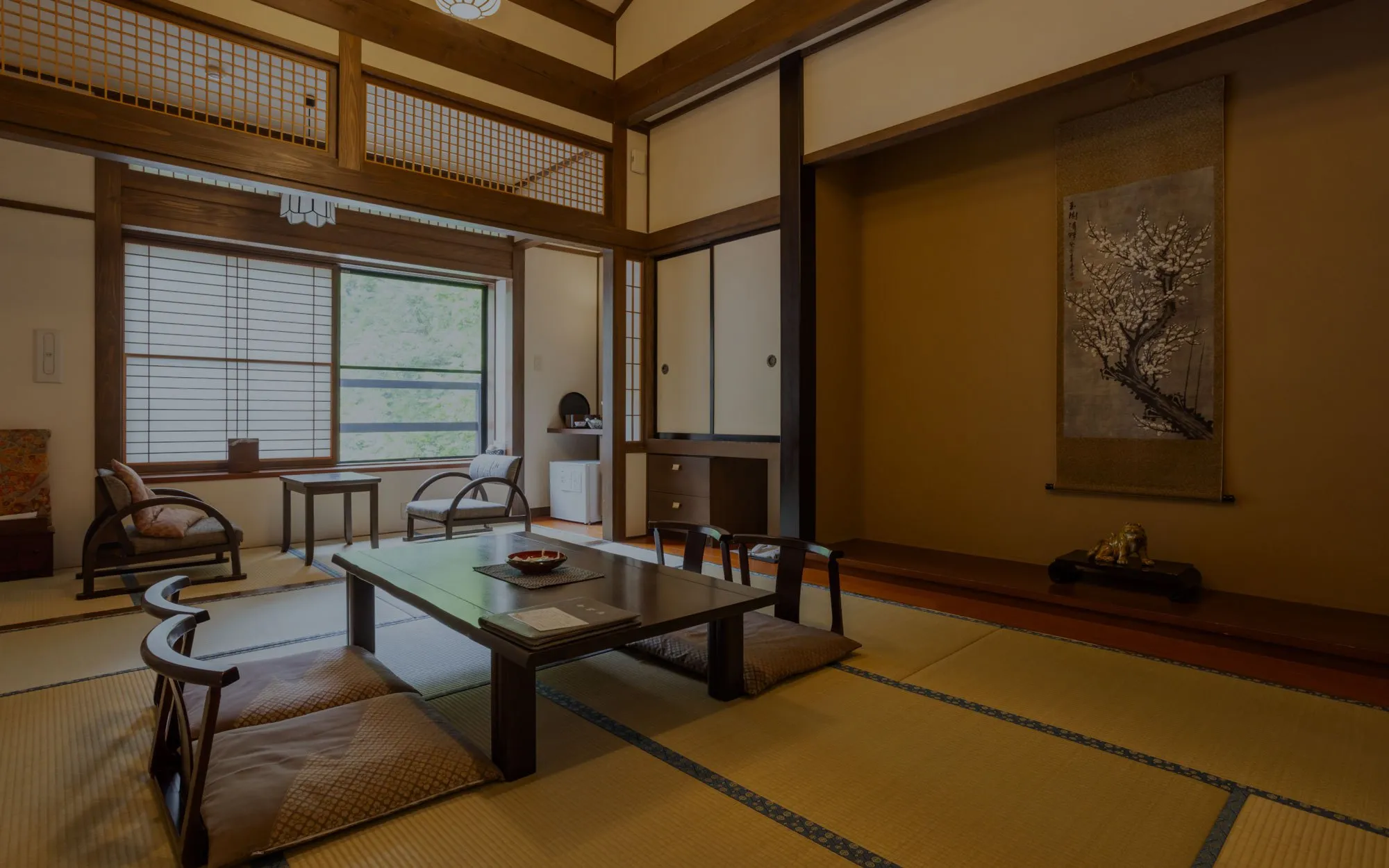
Notoya Ryokan was founded on the river in 1892, and the poet Saito Mokichi slept there in August 1945. It takes bookings from abroad only on its own website, not by phone or email. The town asks overnight guests to follow their inn’s own arrival instructions; Notoya runs a pickup from Oishida Station if you ask. Check-in is from 2 p.m. Its rooms are in two buildings, the main house and an annex; ask for the main house, the wooden inn in the photographs. Rates appear only in the booking engine, by date.
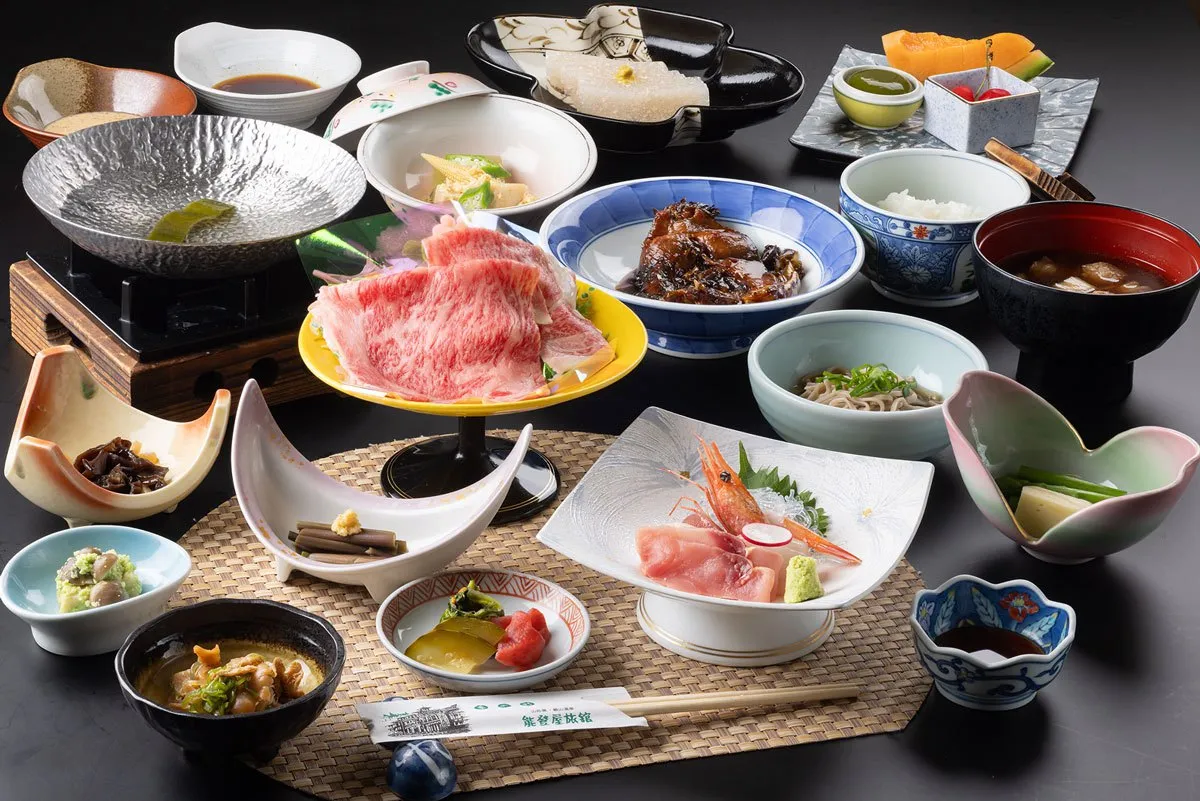
Dinner is at 6: kaiseki, a seasonal tasting menu, here of local food: Obanazawa beef, duck, carp. The inn cannot cook vegetarian or vegan meals, or meals for allergies. At 8, when the last day visitors have gone, the inn recommends an hour’s walk under the lamps. The cave bath, the inn’s original spring, is taken privately. The open-air bath up the hill closes for the snow from about December to April.
Breakfast is from 7:30. Checkout is at 10:30.
March 7
When the window closes
The bus rules end on March 7, 2027, unless the snow holds. If they are extended, the town will say so in early February. Last winter’s, a first trial backed by Japan’s national tourism agency to manage the crowds, ran from December 20 to March 1. So the season moves by a few days each year, and the snow decides the rest. Book the room first, as soon as you have dates, then the bus on its sale day if you still need it. January and February are the heart of the period.
Outside the winter rules, the lamps still light every evening, and no bus ticket stands between you and them.

The key
- Be online at midnight Japan time on December 1 (10 a.m. Eastern on November 30) for January's 2–6 p.m. seats. February's go on sale January 1.
- Book the outbound bus about an hour before sunset: around 3:40 p.m. in mid-January, 4:20 p.m. in mid-February.
- Better still, book a night at Notoya on its own website. The town tells staying guests to follow their inn's arrival instructions, not the day-trip rules.
- In town, walk on the river side of the diamond markers. Snow slides off the roofs on the other side.
- Never walk the mile and a quarter from Taisho Roman-kan, even if the bus line is long.
The dossier · Haven Nº 032
- Where
- Obanazawa, Yamagata Prefecture, Japan
- From Tokyo
- About 3 h by Yamagata Shinkansen to Oishida, then about 40 min by bus
- Winter rules
- Dec 19, 2026 – Mar 7, 2027 · may be extended
- Shuttle
- From Taisho Roman-kan · every 20 min · out 9 a.m.–6 p.m. · last back 7:30 p.m.
- Fares
- Round trip ¥700–¥1,200 ahead · ¥1,000–¥1,500 on the day
- Evening seats on sale
- January: Dec 1, 2026 · Feb–Mar 7: Jan 1, 2027 · midnight JST
- Sunset
- About 4:30 p.m. on Jan 1 · about 5 p.m. on Feb 1 (Yamagata)
- Stay
- Notoya Ryokan, founded 1892 · book on its own site
- Public bath
- Kajika-yu · 8 a.m.–8 p.m. · ¥300 · free for town guests
Our verdict
Come for one night, not one afternoon. The bus gets you a look at the lamps; the room gets you the street after the last bus has gone, and the bath before breakfast.
Not for you if you want to drive yourself in, you dislike crowds at dusk, or you need a vegetarian dinner (Notoya does not cook one).
Before you go
Do you need a reservation to visit Ginzan Onsen in winter?
Yes, if you are visiting for the day. From December 19, 2026, to March 7, 2027, cars may not enter the town: you park at Taisho Roman-kan and take a timed shuttle, best booked ahead. Same-day tickets are sold only if seats remain.
When do the evening shuttle tickets go on sale?
The 2 p.m. to 6 p.m. departures for January go on sale on December 1, 2026, at midnight Japan time; February 1 to March 7 on January 1, 2027. Morning and midday departures for the whole season went on sale on November 1.
How much is the Ginzan Onsen shuttle?
A round trip costs ¥700 to ¥1,200 booked ahead and ¥1,000 to ¥1,500 on the day, depending on the outbound time, plus a ¥165 booking fee. Payment ahead is by credit card only.
Do overnight guests need the shuttle?
The town asks guests staying overnight to follow their inn's own transport instructions. Notoya runs a pickup from Oishida Station on request.
How do you get to Ginzan Onsen from Tokyo?
About three hours by the Yamagata Shinkansen to Oishida, then about 40 minutes by bus. In winter, a day visitor on the bus without an advance booking may be set down at Taisho Roman-kan to change to the shuttle.
Ginzan Onsen winter access, official site. We earn nothing on this link. Images: courtesy of Ginzan Onsen and Notoya Ryokan.
The Key · our weekly letter
Get the dossier: Ginzan Onsen.
The rooms to ask for, the tables to book and the week to go, in one letter. Then The Key, every Thursday.
The list opens soon, with the first letter.